Showing posts with label terrorism. Show all posts

Tuesday, February 23, 2016

Apple Today Keeps Security at Bay


Prevailing opinion appears to be coalescing against Apple’s refusal to unlock the San Bernardino terrorists’ smartphones.  To many, Apple is more interested in protecting its brand than cooperating to protect our national interests.  As a practical matter, it would seem highly unlikely Apple would adopt a position contrary its financial self-interests, so the assumption that there is an underlying business motivation has some merit.  Yet, Apple has staked its flag upon privacy issues.  As Tim Cook, Apple’s CEO’s, expressed in a rank and file letter today, the issue is not about unlocking one phone. There are bigger issues at stake.    
Beyond the immediate, the Apple controversy has raised policy discussions about the need for government agencies to have formal backdoors to encrypted communications and data.  The basic argument is that criminals and terrorists can operate in the dark by using commonly available strong encryption like AES 256 ciphers and there is no practical way for authorities to de-encrypt and access information critical to thwarting serious criminal activities.  I confess, the arguments for backdoors are compelling.  But, before we rush headlong down backdoor paths, I would suggest we understand where they could lead, and in order to do so we first must uncover the substance of the issue.
Nobody would assume the Navajo language, while virtually undecipherable and used during World War II for secret communications, would require a government back door.  For that matter, whether it is undecipherable ancient Linear A script or modern English, language itself is a form of encoded information.  So why does the Government believe a backdoor is required for modern encrypted communications and stored data?  Is there something different about encrypted information than any other undecipherable or obscure human language?  Perhaps, it is the ease of deciphering an encoded communication that is the essential difference.  While on the surface this seems to be a distinction without substance, it could be rightfully argued that machine generated encryption is sufficiently non-human in origin to be different.  In other words, sufficiently unbreakable encryption exceeds the natural human capacity to devise and initiate such as a form of expression in the absence of a machine.  Thus, it is not a form of protected human speech.  On the other hand, there are many forms of human expression that defy easy interpretation or understanding.  In fact, it can be at times so abstract that no machine could decipher it.  As Picasso once famously said “Painting is just another way of keeping a diary.” I think we would agree deciphering Picasso’s visual diary would be no easy task.  Entire art departments devoted to that endeavor are no closer than the day he sat down with brush in hand.  But, more to the point, ciphers have been used since antiquity, some being more artful than others, for good and bad, precisely for secrecy.  Even in more recent pre-computer times, anyone could employ a relatively simple, mathematically unbreakable Vigenere cipher scheme. So, we again are left with the question of what is the real difference.  Whereas a Vigenere cipher requires only paper, pencil and a random passage from a secret book, modern encryption achieves these ends in a much more efficient and pervasive way.  Even the Vigenere cipher itself is available as one-time pad software, albeit grossly inefficient for real-time communications.  So, it would seem the real difference is that it is too easy, too accessible and too quick.  
With any “too” controversy, the basic contention is that something is too advantageous.  It upsets accepted norms or understood conventions of the relative distribution of power.   This is exactly what government security agencies argue.  There is nothing more principled or deep about it.  They don’t want criminals to enjoy an advantage, because modern encryption is too good, too available and too uncontrolled.  Of course, unfair advantage is a matter perspective.  I, for one, hope that law enforcement enjoys every possible advantage over criminals.  But, I also don’t want criminals accessing my sensitive private data either.  The problem with backdoors is just that.  It is another way in.  But insofar as law enforcement and national security are concerned, for most of human history, even up to and including the advent of modern communications, crafty criminals enjoyed the advantage when it came to secret communications.  It was not until the communications age that phone tapping and eavesdropping came about and gave law enforcement a leg up.  Phone networks became the places where most communications occurred, and intercepting communications became an essential part of  law enforcement’s repertoire.  Of course, this advantage still required a showing of probable cause before a warrant would issue.  So, basic police work was still needed to show a good reason.  However, many claim that even these protections have been eroded under the banner of pressing national security concerns since 9/11 under  the FISA court.  Its critics point out that the FISA court denied a paltry .03% of over 30,000 requests for electronic surveillance searches.  Moreover, critics complain that the FISA court operates in secrecy without public access or visibility into its proceedings and have permitted what amount to large-scale, sweeping general search warrants.  Yet, the FISA Court defends itself by noting that many of the approved requests were substantially modified before they became finalized, and it scrupulously protecting individual liberties from unreasonable searches.   Be that as it may, law enforcement’s technological advantage has been further magnified with the growth of big data, massive private and public transactional data stores, and a proliferation of public surveillance cameras.  For the first time in history, a human’s location, phone calls, spending and buying habits, social dialogue, extended family members, credit history, favorite TV shows, eating habits, topics searched online, and even books read can be found and are subject to government access, subject to legal process.  For all the talk of “cloud security”, it may, ironically, create the greatest vulnerability to personal privacy yet.   Private papers are no longer tucked away in desk drawers, stored on backroom computers or copied away on CDs in shoeboxes, immune from warrantless search and seizures.  Now, it is somewhere else in the ether, under the convenient management of commercial parties.  Cynically, the cloud is a one-stop shop for subpoenas, and in many instances your information is accessed without you even being notified.  We are leaving “digital footprints” all over the world and it provides law enforcement with a wealth of investigative advantages.  This is offered up as a social good that helps make our communities more secure than ever before.  It is true in many respects.  But, we would be wise to be aware of its potential costs so as to avoid being short-changed on liberty.
The classic approach that courts use to address issues like the government’s need to access encrypted private data versus the right to free expression and to be secure in papers and effects is called substantive due process analysis.  The basic inquiry is whether the restraint or infringement upon a particular fundamental freedom is the least intrusive  possible to achieve a compelling need of the state.  Yet, we ought to carefully think about whether this standard will adequately protect fundamental freedoms.  The US Supreme Court found a new right of privacy in the US Constitution in Griswold v. Connecticut.  In so doing, it did as much to expand individual privacy rights beyond traditional property-based concepts as it did in subsequent cases to whittle them away with a myriad of exceptions using substantive due process reasoning.  Even the very existence of the right of privacy is born out of relativism.  It only exists insofar as  a reasonable expectation of privacy exists, which turns on what most people think is, or treat as, private in ordinary course.  The problem is that social behaviors can change relatively quickly.  In the case of technology, there is hardly any greater prime mover of behavioral change afoot.  Thus, I fear right to privacy will wither under the rapid transformations in attitudes brought about by the persistent infiltration of technology into every aspect of our lives.   
As we trek along the evolution path of man and machine, questions around encryption will continually arise.  Yet, the core of the root conflict goes beyond encryption, in the sense that it is  about the role of society at large versus the individual in relation to who really governs a new form of emerging omniscient intelligence that can increasingly see, record, and analyze the most trivial aspects of our daily lives.  It is only a matter of time before machine augmentation of human bodies is commonplace.  As it is Amazon Echo sits in living rooms listening to every word spoken awaiting to assist.  Every large city is populated with cameras monitoring public places; automatic license plate readers innocuously record passersby, and your mobile phone tracks your every movement.  The fundamental question becomes, what are the limits of government access to the communications between mind and personal machine.  It is a widely held belief that one cannot be compelled to testify against oneself.   The brain, with all its memories, recollections and thoughts, are free from government intrusion.  We have even outlawed torture against the worst of our enemies to pry free secrets relegated to the recesses of the mind.  Yet, what cannot be pried out by coercion, will readily be available through not only backdoors in the name of security, but more likely through a gladly opened front door.  In our emerging technology-infused society, your coffee pot becomes a snitch for somebody.   Personal privacy will shrink to the space between your ears, as smart refrigerators, TVs, cars, lights, and so on become an ever present life companions. There will be no expectation of privacy because it will have been given away long ago in exchange for the innocuous promise of convenience and ease.  This, then, is the risk – to be lulled into the complacency of digital convenience served up by a myriad of eager companies aiming to please.   
Some may argue that backdoors are the price of security in an increasingly dangerous world.  Access to powerful tools of secrecy and deception have given bad actors too much power, and the playing field needs to be rebalanced in favor of law enforcement.  I would argue that we merely are reverting to the status quo and this is not so much a new battle as much as a familiar conflict between individual autonomy and state control in pursuit of security.   Some argue that the stakes are higher than ever because of the threats of modern terrorism, global crime syndicates, rogue nations, weapons of mass destruction and a host of other emerging phenomena.  I’m not so sure.  History is replete with successive generations of wholesale slaughters of city inhabitants by hostile invaders, mass enslavement, savage conflicts and global pandemics.  I find it unfathomable that we are in any more precarious situation than those preceding us.  That said, I have no interest in revisiting the Middle Ages, either.  These issues require significant reasoned discourse with an understanding that technology will not stop and is accelerating at an ever-quickening pace.  The ultimate question will be, in whose hand or hands this awesome power will sit.  I find no more comfort in Apple or Alphabet guarding privacy than good old Uncle Sam.  As between them, I would bet on the one that has the greatest guarantee of human freedom in the history of mankind rather than a corporate charter of maximizing profitability for shareholders.  Ultimately, it will fall upon those in black robes covetously protecting our freedom; otherwise, I don’t think we would stand a chance against technology in anyone’s hands. Whereas Apple seeks to preserve and grow its profits, and government bureaucracies seek to preserve and expand power, it is the acolytes of the Constitution, unencumbered by neither, that can best preserve liberty.  So, I say good for Judge Pym for the time being, but he must jealously guard liberty and understand there is more to privacy than mere expectation by custom.  Privacy is inherently human and our machines cannot be allowed to make us less so.

Friday, January 9, 2015

The Charlie Hebdo Attack – A Foreshadowing of a U.S. Nightmare

At the risk of overstating causation, I have come to believe that the Jungian notion of collective unconsciousness operates like an unseen force in the world of terrorism.  This seems especially true in the context of modern, loosely affiliated terror groups.  While top-down organizational planning occurs in some cases, it is striking how many incidents are characterized as “lone wolf” exploits.  Despite this characterization, we know that these actors do not act alone in a broader sense.  Putting aside self-identification with a radical ideology, they also exhibit discernible patterns of approach and action.  Their tactics are drawn from a well of depravity over time and place, and show signs of adaptive continuity.  And, this brings me to my point.  I see a confluence of terror actions that reflect a shared vector of thinking which ought to raise alarms.  I am very worried that it is only a matter of time before a US school undergoes a commando style terrorist attack.  There are too many behavioral signals that lead in this direction.

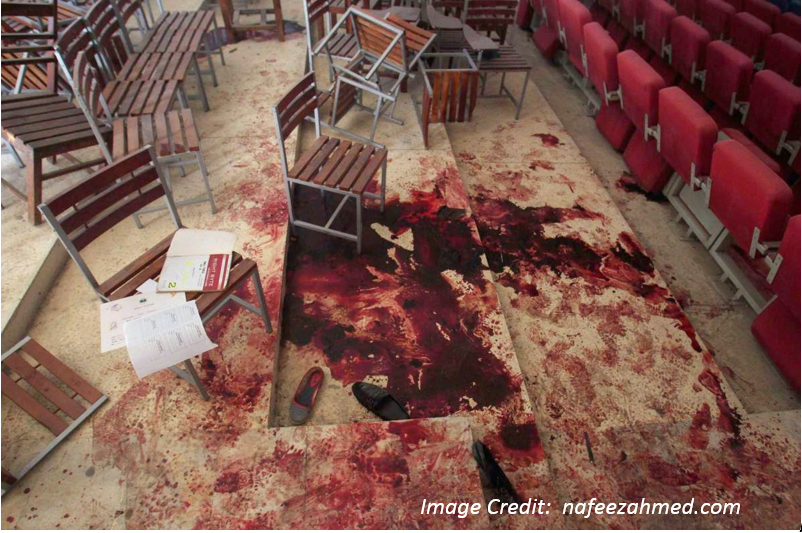
The Paris terror attack on Charlie Hebdo magazine comes on the heels of the Pakistan school massacre where Taliban terrorists indiscriminately attacked a school and left 153 dead.  In the Pakistan school attack, a relatively few attackers were able to inflict massive casualties through a coordinated military style attack on a “soft” target.  The Charlie Hebdo attack was also a small coordinated action against a soft civilian target. But, the Paris attack also bears a similarity to the Boston Marathon bombings.  In each case, the perpetrators are disaffected immigrant bothers. Whether the Tsarnaev brothers influenced the suspected brothers in the Paris attack is not known, yet it bears a signature.

Following this Gestalt, the United States suffered the worst school shooting in history at Sandy Hook School in Connecticut in December 2012.  While not undertaken by a “terrorist” in the classical sense, the event was a proof point that very large casualties can be achieved by one actor, and schools are generally defenseless.  It also inflicted vast damage to the US national psyche.  Simply put, attack schools and you attack the very heart and soul of America.  Whether Adam Lanza inspired the Pakistan Taliban would be pure speculation, but again there is a signature of evil bearing a resemblance.  While the Taliban have routinely attacked small girls’ schools in Afghanistan under the pretense of religious offense, the Pakistan school attack had an entirely different tone. It was undertaken purely to exact great retribution and strike massive fear in the Pakistani population.  Framed differently, Sandy Hook showed feasibility and effect. A terror mind could not help but be influenced by the reality of its devastating effect.
The Paris attack has a linger to the Mumbai terror attacks in November of 2008 which resulted in 164 dead and over 300 wounded.  Mumbai was a tactical and behavioral departure point.  It showed that commando style attacks by a small coordinated group could exact large casualties on soft civilian targets.  While bombs were used, the use of automatic weapons was prominent.  The “success” of this style of attack again left its mark on the master psyche of terrorists.  The Charlie Hebdo attack just reinforced this notion. 

Going back even further though, it is possible to follow this deadly lineage and extract some lessons.  In 1998, the United States embassy bombings occurred which killed hundreds of people in simultaneous truck bomb explosions in Dar es Salaam and Nairobi. The date of the bombings marked the eighth anniversary of the arrival of American forces in Saudi Arabia.  These bombings succeeded the Khobar Tower bombing in 1996, which was an attack on a US airman residential complex.  These attacks, while striking an arguably governmental targets, were nonetheless soft targets.  In the Khobar case, a petroleum truck bomb was detonated sheering off half of the building and killed 19 airmen in Saudi Arabia.   A year earlier, in 1995, Timothy McVeigh blew up the Alfred P. Murrah Federal Building with a truck bomb filled with fertilizer, collapsing half of the building and killing 168 people and injuring over 600 others.  The Oklahoma City attack was preceded by the first Twin Towers attack in 1993 when a truck bomb was driven into the belowground garage and detonated.  Even further back in time, we find the 1983 Marine Barracks attack in Beirut, which killed 229 servicemen with two truck bombs.  The Khobar attack a decade is eerily similar to it.  It is difficult to avoid the parallelism and conspiracy in thought that propels the next act of barbarity.
As far as the recent Paris attack is concerned, the perpetrators appear to have some connection with Syria.  As thousands easily move through Europe to fight with ISIS, these radicalized fighters will return as better trained, battle hardened zealots in Europe.  We can see the risks and challenges that European nations will continue to face.  But, the United States is hardly better off.  Without entering into the debate over semiautomatic weapons, the fact is powerful weapons are readily accessible and the United States’ porous borders affords small groups of terrorists relatively easy entry to the country. To assume we will remain insulated from motivated radical terrorists is a deadly mistake.  The means, proven feasibility, massive psychological terror factor and intent are all present.  The chance of commando style attach on a school by a few individuals is a real threat, as is a truck bomb attack.  While obtaining large quantities of explosive materials is difficult, hijacking or stealing a fuel tanker is not.  Driving a tanker into a school facility and detonating is a real possibility given past exploits.  Finally, using the two tactics in combination is also a possibility, given that have used similar tactics in Afghanistan and Iraq on police and army compounds.

In speaking with one law enforcement person about school safety, he indicated that most schools are not worried about active shooters, and are dealing with more practical day to day security problems.  While I can appreciate this pragmatism, there is an overarching pattern of potentiality borne out of past conduct that we ought to recognize.  I greatly fear that a terror attack on an U.S. school by militants is only a matter of time, and the effects will rock this Nation to its core.  I hope and pray that I am wrong. 
Yet, we need to heed the clarion call and continue to make changes in our security posture.  First, schools buildings need to be shielded from a truck assault.  Any large truck, like a tanker or trailer truck, needs to be routed and controlled outside a blast zone until it is verified.  Regional areas should have quick reaction counterterror swat teams that are equipped to respond and defeat well equipped and military trained terrorists.  Schools and law enforcement agencies need to have real time collaboration capabilities for situational awareness and ground truth for tactical advantage. Being able to communicate with school personnel and see inside schools is essential.  Glass windows and doors need to be upgraded to be more breach proof to delay an assault.  Reinforced safe areas should be created in schools.  More one-way exits should be installed to enable personnel and students to evacuate without going through bottleneck points and feeder spaces that create kill zones.  While many of these suggestions may seem over the top, a terrorist attack is by its nature dealing with the unthinkable.  The cost of hardening our schools is a small price to pay if it can save the lives of several hundred or more innocent children – namely ours.

Thursday, October 2, 2014

Ebola - A Global Terror Vector

This is a copy of an article submitted to the Yale Global Health Review in February, 2014 for publication.  It was never published.  This paper was a self study project undertaken by my daughter.  With the current emerging global Ebola crisis, this information is too important not to release to the web.  YGHR missed the boat on a critical global health issue. 


Joe Mazzarella 
********************************************************************************
Global Health Risks of Non-state Transnational Terror
Grace Mazzarella
January, 2014


In September of 2000, the United Nations, through its member states, agreed on Millennium Development Goals (MDGs).  The MDGs are a series of goals aimed at making measurable improvements in alleviating worldwide poverty, hunger, disease, illiteracy, environmental degradation, and discrimination against women within a 15 year period.  Since its adoption, the World Health Organization (WHO) has reported that great strides have been in the intervening years.[1]  These gains are the result of concerted governmental and non-governmental programmatic efforts.   Despite this progress, these gains are vulnerable to being undermined by both well-known and less well-known and understood emerging systemic threats.  One of these less well-known and understood threats is the emerging systemic risks associated with the agents and causes of geopolitical conflict.   In the area of global health, the new paradigm of multinational, non-state sponsored terrorism represents a significant and growing risk factor with unique challenges for the world health community.   


Most state efforts to combat terrorism are motivated by a desire to prevent acts of terrorism and their immediate impacts, namely the indiscriminate loss of life and injury to civilians and noncombatant personnel.   While acts of terrorism catch worldwide media attention, terror groups can have significantly greater far reaching and lasting effects through sustained low intensity conflict.  Terror in itself is not the objective for terrorist groups inasmuch as it is to create conditions of increasing civil instability to achieve various ends.  These ends are often political, ethnic and/or religious in nature.  As a consequence, civilian populations are often targeted based upon on their ethnic and religious composition and political alignments.  For the ideological modern terrorist, the objective is to inflict not only death, but to instigate mass displacement and removal of objectionable segments of the civil population.  This, in turn, creates enclaves of control to stage, assemble and support larger operations with the intent of further challenging incumbent government forces, disrupting national systems of civilian and military support, such as commerce and transportation routes and utility infrastructure, and creating successively greater instability within the state.   These strategies and mass displacement effects have been observed in a variety of conflicts including Iraq, Syria and the Sudan.
Focusing on Syria, one needs to only consider the scale of humanitarian tragedy occurring in Syria to understand the scope and nature of this problem.    As of the writing of this Article, the United Nations High Commissioner Refugees (UNHCR), reports that over 2.3 Million refugees have been displaced from their Syrian homes as a result of ongoing civil war, and it is predicated that the refugee population could reach 4 Million if the conflict continues along it present course.[2]  Despite its political characterization, the greater reality is that the Syrian civil war is being fueled by an influx of multinational Islamic fighters, many of which are aligned with known terror groups such as Al-Qaeda and external state sponsors of terrorism like Iran.[3] Beyond the effects of conventional fighting between insurgents and government forces, civilian populations have been brutalized by numerous reported attacks of barbarity designed to terrorize and incite mass civilian departure.  In one of many similar reported incidents, on January 17, 2014, Al-Qaeda insurgents reportedly overran the western-backed Free Syrian Army held town of Jarabulus located in Northern Syria.  Al-Qaeda fighters then initiated an indiscriminate killing spree, murdering men, woman and children.   Among their heinous acts, over hundred men were rounded up and Al-Qaeda fighters began slaughtering them, including beheading their victims and posting heads on spikes.  As a result of this terror, nearly 1,000 civilians fled for the safety in Turkey.[4]   Syria’s civilians, much like in other recent modern terror infused conflicts, are suffering extreme and indiscriminate brutality which is driving mass population displacement.

But Syria is not unique.  In many of today’s conflicts around the globe, terrorist organizations operate to destabilize government institutions by sowing fear and insecurity among the populace, and eroding the will and capacity of government institutions to carry-out the delivery of basic services.[5]  Whether one begets the other is open for debate, however it is generally recognized that terror groups tend to coalesce and root themselves in places where governments are politically weak and have failing civil institutions.  Cases on point include Iraq, Afghanistan, Pakistan, South Sudan, Somalia, Libya, Algeria, Nigeria, the Palestinian Territories, Lebanon, Indonesia and Yemen, among others.[6]  In fact, the number of displaced person has risen year over year and reached its highest since 1994 with an estimated 45 Million refugees, and the UNHCR reports that vast percentage of refugees are arising within the aforementioned countries.[7] As non-state actors foment civil unrest and spread terror, large civilian displacement becomes a major pandemic disease vector that has broad regional and global implications.
By way of example, the Syrian war has given rise to an outbreak of polio, a disease that has been effectively eradicated from most of the global community, save a few, through decades of vaccination efforts.  Prior to the conflict, the last reported case of polio in Syria was reported in 1995.  In November of 2013, the WHO raised an alarm with an outbreak of up to 37 confirmed cases of polio. [8]    As result, a massive immunization effort has been launched to stem the outbreak.  Nonetheless, this in turn has raised fears that there is high risk of a polio outbreak in Europe given that large numbers of Syrian refuges may begin to migrate from temporary camps in neighboring countries to Europe as they search for better living conditions.[9]
Other places where polio has gained a foothold through disease importation include the African horn nation of Somalia, which is home to a nominally functioning government and numerous terror camps.  Other countries of polio importation, as reported by the WHO, include several African countries with terror based insurgencies such as Niger, Mali and the Congo.[10]  Meanwhile, the countries of Afghanistan, Pakistan and Nigeria remain polio endemic.  All of these locations share another common thread besides polio.  They are each suffering from ongoing conflict spurred by endemic terror groups operating within their borders are main drivers of forcible displacement.
 Overall, the Syrian conflict serves as a powerful example of the role that non-sate terror organizations play in breeding conditions for global health emergencies and potential pandemics.  While the twentieth century was occasioned by state conflicts, the twenty-first century has given rise to a new form of non-state entity conflict that is transnational in nature.  Hallmarked by internal destabilization, these forces operate to sow political instability and fear among the populace and ignite civil strife.   Unlike traditional sovereign conflicts, the ability for world organizations to reach into and operate in these conflict areas to stem global health emergencies is often hampered due to non-existent diplomatic functions and no reliable or formal command and control leadership capable of brokering necessary conditions of security and safety for non-combatant relief workers.   In Syria, the effort to provide humanitarian relief has been thwarted in many cases and nation-states have been unable to provide consistent meaningful humanitarian aid.[11]
In the emerging reality of geopolitical conflicts characterized by non-state terror groups, it is possible that global health emergencies may be exploited as another tactic to create large scale destabilization and fear.  In this vein, while seemingly remote, it is not unreasonable to assume that terror groups could seek to spread highly contagious diseases in target populations through one or more terrorist cells.  In essence, the dynamics of population displacement, nonfunctional health delivery systems, and access to contagious diseases becomes a vehicle for biological warfare, or coined another way its own weapon of mass destruction (WMD).  While polio would be an unlikely candidate due to mass vaccination, infectious diseases such as the hemorrhagic Ebola or Marburg viruses could be used to create a large scale pandemic with a small team of sickly volunteers. Further, proximate access to and vectors for movement by a multinational terror organization are present because they are coincident with terror endemic areas, notably the Sudan, Uganda (bordering South Sudan) and Democratic Republic of Congo.[12]  These viruses can be opportunistically identified in the population and then intentionally passed from a host to willing conspirators. Placing “ground zero” patients inside of highly dense refugee camps along and infecting several disparate international targets has the potential to create global impacts that could overwhelm response systems and resources.  This tactic, albeit crude by today’s standards, has a historical precedent within North America when British forces used infected blankets of small pox to eradicate Native Indians during the French Indian Wars.[13]
More generally, non-state controlled areas with largely collapsed or inoperative healthcare systems and large refugee populations present conditions for pandemic outbreaks that can impact local, regional and global security.   This risk requires collaboration and attention among not only world health authorities but political and policy leaders, security experts and institutions of research and higher learning in order to create the necessary programs to monitor, identify, respond to and mitigate these hazards.    As the world community makes progress towards its MDGs, it is important that it recognize emerging changes in geopolitical dynamics and be prepared to adapt its programs and strategies to counter their associated risks. 


[1] United Nations, The Millennium Development Goals Report 2013, 1 July 2013, ISBN 978-92-1-101284-2, available at: http://www.refworld.org/docid/51f8fff34.html.
[2] Syria Regional Refugee Response, UNHCR Interagency Information Sharing Portal –Regional Overview, Web. 20 Jan. 2014 (http://data.unhcr.org/syrianrefugees/regional.php)
[3]  Laub, Zachary, and Masters. "Al-Qaeda in Iraq (a.k.a. Islamic State in Iraq and Greater Syria)." Council on Foreign Relations, March 2013.
[4] Hunter, Isabel, Al-Qaeda slaughters on Syria's killing fields, AL Jazeera Online (January 21, 2014) (http://www.aljazeera.com/indepth/features/2014/01/al-qaeda-slaughters-syria-killing-fields-2014121112119453512.html)
[5] Audrey Cronin, Ending Terrorism – Lessons for Defeating Al Qaeda, International Institute for Strategic Studies (Adelphi Paper 393, 2008), Ch. 1.
[6] National Counter Terrorism Center, Counterterrorism Calendar 2014 – Interactive Map, Web, accessed January 22, 2014 (http://www.nctc.gov/site/map/index.html)
[7] UNHCR-Global Trends Report 2012, Displacement-The New 21st Century Challenge, June 19, 2013 (http://unhcr.org/globaltrendsjune2013/UNHCR%20GLOBAL%20TRENDS%202012_V08_web.pdf)
[8] Global Alert and Response, World Disease News, Polio in the Syrian Arab Republic – update, World Health Organization (November 23, 2013), Web (http://www.who.int/csr/don/2013_11_26polio/en/index.html?utm_medium=twitter&utm_source=twitterfeed)
[9] Eichner &Brockmann, Polio emergence in Syria and Israel endangers Europe, The Lancet,  Volume 382, Issue 9907, Page 1777, 30 November 2013 (Elsevier Ltd, pub. online November 8, 2013, http://www.thelancet.com/journals/lancet/article/PIIS0140-6736(13)62220-5/fulltext)
[10] Polio Global Eradication Initiative Annual Report 2012, World Health Organization (WHO, Geneva, March 2013). (http://www.polioeradication.org/Portals/0/Document/AnnualReport/AR2012/GPEI_AR2012_A4_EN.pdf).
[11] Blanchard, Humud & Nikitin, Armed Conflict in Syria: Overview and US Response, Congressional Research Service, Rel. RL33487, January 14, 2014 (avail. http://www.fas.org/sgp/crs/mideast/RL33487.pdf), 10. “As with humanitarian assistance, U.S. efforts to support local security and service delivery efforts to date have been hindered by a lack of regular access to areas in need. According to Administration officials, border closures, ongoing fighting, and risks from extremist groups have presented unique challenges.”
[12] CDC, Known Cases and Outbreaks of Ebola Hemorrhagic Fever in Chronological Order, Web, accessed January 23, 2014, and CDC, Known Cases and Outbreaks of Marburg Hemorrhagic Fever, in Chronological Order, Web, accessed January 23, 2014. (http://www.cdc.gov/ncidod/dvrd/spb/mnpages/dispages/marburg/marburgtable.htm).
[13] F. Fenner et al., The History of Small Pox and its Spread Around the World, (Geneva, WHO, 1988): 239.] See, also, Sheldon J. Watts, Epidemics and History: Disease, Power and Imperialism (Yale University Press, 1999) for a comprehensive exposition on the geopolitical impacts and epidemics in the Western world.


Monday, July 21, 2014

Moving Towards Smarter Immigration and Border Control

Significant political debate swirls around the issue of illegal immigration within the United States. Despite the great divergence of opinion regarding immigration policy, one would believe that controlling border entry is an area of consensus. If nothing else, a porous border presents significant risks of importation of disease, criminality and terrorism. One aspect of the border and immigration problem that has been overlooked is the effective use of systematic information gathering and sharing to begin to discover the source, means and methods being used to exploit our borders. Simply stated, a tremendous amount of intelligence with immense value is being left on the table. Whether intentionally or unintentionally so, we are operating with blinders as we play cat and mouse games at the border.

In large measure, the influx of illegal immigrants into the United States is being facilitated by systemic processes fostered by transnational drug cartels and other organized criminal groups that seek to profit from human smuggling. Successful border exploitation is a result of decades of experience through trial and error associated with drug trafficking. In the evolution path to human smuggling, there is the early experience of the “mule”. These are illegal aliens encouraged to cross borders with contraband. Enterprising criminality quickly recognized that humans themselves are merely another form of contraband form which to profit. Human smuggling is simply a natural outgrowth of a matured and operationalized illegal drug trafficking phenomena.

In this regard, Illegal immigration bears the hallmarks of a large scale, organized criminal enterprise with hierarchal command, divisions of labor and functions, specialization, communication and transportation systems and money laundering infrastructure. The picture of a poor immigrant family picking up roots on their own and making their way to a new way of life is outdated. Illegal immigration is big business. Criminal syndicates operate across borders through untold numbers of “street soldiers” recruited through gangs operating in the United States and abroad. Beneath the surface, a highly adaptive and effective system exists consisting of recruiters, safe houses, look-outs and counter intelligence, document forgers, identity thieves, chop shops and auto-body repairers, transporters, enforcers, money facilitators, and guides. Drug trafficking, human smuggling and gun smuggling all share the same ecosystem of illicit activities. When we fail to gather information that helps to define the nature and extent of this far reaching system and how it operates, we limit our understanding and deprive ourselves of the ability to effectively combat and defeat these activities.

In many ways, we are currently hindering our ability to discover essential information. Currently, efforts to police illegal immigration are effectively segregated from other law enforcement activities that focus on criminal activities. This is further compounded by numerous federal, state and local law enforcement agencies have different jurisdictional and enforcement mandates rendering day to day cooperation and information sharing among agencies challenging. Local law enforcement is the most effective day to day information gathering agency because it is embedded in the local community and has a more intimidate understanding of what is happening on the street. Yet, as a matter of federal policy, local law enforcement is unable to enforce illegal immigration laws and detain illegal aliens. The best local law enforcement can do is refer the matter to Immigration and Customs Enforcement which, in turn, is overwhelmed and allows individuals to remain free on their own recognizance except in the most egregious cases. Being by nature transient and wishing to evade enforcement, most illegal aliens never report back and melt into the landscape. On the other side of the coin, Immigration and Customs Enforcement has no idea where most illegal immigrants are located at any point in time and the data that is available is often stale or erroneous.

Despite these problems, illegal aliens have been given access to public educational and health and welfare programs without any form of verification as to their stay status, and in many cases stolen social security numbers and other false documentation is presented. Public welfare institutions and healthcare facilities are blocked from verifying identity or reporting the presence of illegal aliens to law enforcement. So, at all levels, the ability to gather information about the whereabouts of illegal immigrants, is either nonexistent or exists in silos.

Therefore, one of the first steps to beginning to solve illegal immigration problem is knowing the nature and extent of the problem, and beginning to unravel the means, methods, persons and organizations behind this phenomena. This can occur with a combined effort among federal, state and local agencies to actively track and record the presence of illegal aliens. Law enforcement, schools, hospitals, and public benefits programs must be enlisted to report the identity and presence of illegal immigrants. Further, the use of social security numbers should be required to be reported to a national database to begin to ferret out identify fraud. Assuming there will be policy towards allowing illegal immigrants to stay under a documented worker program, there should be a requirement that illegal immigrants provide key information that can assist authorities in developing a better understanding of the system they are fighting. This information would include where illegal immigrants came from, how they were recruited, who recruited them, who helped them and how they made their trip, where did they stop, etc. Just like an employment application, truthfulness and accuracy should be required as a condition to stay and any inaccuracy should be grounds for deportation.

Over time, a reservoir of data and associated trends and correlations will begin to emerge. Americans have an uncanny ability to tackle complex problems when they put their minds to it. Being able to track, quantify and analyze illegal immigration should be something that stands above immigration policy. Information collection will empower policy makers and those with the responsibility of enforcement. When we begin to recognize that the border does not stop at the border, and illegal immigration effects every community, we will recognize that border protection is an internal matter that is best addressed by all communities working together, and it starts with gathering and sharing information.

Thursday, April 23, 2009

Lesson Learned from the Mumbai Attacks

Reprint from December 2008 Article - Preparedness Today
By: Joe Mazzarella, Chief Legal Counsel, Mutualink, Inc.

While the precise details of the November 30, 2008 terrorist attack on Mumbai, India continue to emerge, there is enough information available to provide a portrait of events that can offer many valuable lessons for public safety and security leaders. We tread lightly to avoid any notion of opportunism, however, as dedicated public safety communications professionals, the Mumbai attacks reveal the fundamental importance that a real time, community-wide incident based emergency communications sharing platform can play in effective emergency preparedness and response.

Without reproducing the event timeline in detail, the operational signature of the Mumbai attacks provides important information that will assist in preparing for and responding to potentially similar events in the future. As history amply demonstrates, terrorist groups tend to copy and emulate methods that they deem to be successful. Law enforcement and security professionals should recognize that the “success” of the Mumbai operation will provide both a strategic and tactical template for others. The Mumbai attacks are the realization of a predicted security threat scenario – coordinated multi-site urban terror assaults.

In this attack, we note that a massive and multi-faceted emergency response effort unfolded. It included local police, anti-terrorism police units, military units, fire rescue, bomb detection units, medical response, port authority, traffic control, and railway and airport transportation authorities. We can only speculate about the level of cohesive and interoperable communications that existed, however, the response efforts as reported appear to have been chaotic and nominally coordinated. This condition reduced and impaired force effectiveness. It also is apparent that poor and/or delayed communication and information sharing limited situational awareness, response assessments and planning.
Based upon publicly available information, we make the following observations for future emergency preparedness and response planning efforts:
  • Multiple Site Coordinated Attack – Coordinated urban attacks occurred at 10 separate locations, with 8 being within an approximately 4 mile area and the others occurring approximately 15 miles away near the Mumbai international airport. The effect and impact of the operation was catastrophic, spanned 3 days and paralyzed a major financial center with over 12 million people. Yet, it was carried out by a relatively small number of actors, consisting of an operational cell of 10 to possibly 18 people. Identifying that the singular attacks were part of an orchestrated whole took several hours.
  • Key Infrastructure and Community Assets Targeted – Key community assets were targeted or played important roles in the attacks. The targets appear to have been consciously chosen in advance of the operation. The assets were: Hospitals, Police Stations, Railways Stations, Airport Facilities, Port Facilities, Hotels, Cinemas, Cafes and Religious Sites.
  • Targeted Sites Served Multiple Reinforcing Objectives - The choice of sites provides valuable information in assessing the nature and type of facilities that may make attractive targets for future coordinated multi-site urban assaults. Specifically, we note the following:
  • Police Stations - Public Safety Command and Control – Attacking this facility type slows down the security response apparatus and provided other actors time to execute their objectives in other locations. It should be noted that the Security Chief and other high ranking counter-terrorism officers were essentially targeted and assassinated. This tactic appears to have been designed to disrupt command and control, and hobble security response effectiveness.
  • Hotels – Hotels are emerging as high risk terrorism targets. Security personnel should be focusing on vulnerability assessments and preparedness and response plans.
    Hotels, which are historically publicly open environments with a transient guest population, are emerging as preferred targets. The Mumbai hotel attacks were patterned off the success of an earlier Marriott Hotel attack in Karachi, Pakistan. However, interest in tourism related sites and hotels extend back much further, including the Bali hotel bombing in 2002.
The Mumbai Hotel attacks reveal a variety of valuable information and insights:
  1. Symbolic Buildings. The multiple hotel buildings that were targeted had a symbolic purpose from a historical and socio-political aspect.
    Staging Points. The hotels themselves were used as planning, staging and storage points for weapons caches in anticipation of the attack. Some the terrorists were guests.
    Bottleneck Control. Once the public access floor was under control, the remaining floors were effectively controlled and a mass hostage opportunity arose.
  2. Identifying Friend from Foe. External security personnel had a difficult time identifying the actual terrorists and clearing the hotels. Only a few video shots of terrorists’ faces were shared through conventional electronic distribution means hours after the event unfolded.
  3. Closed Circuit Video Feeds. Closed circuit video feeds were limited and in most instances unmanned. Real time feeds could not be shared.
    Layout Plans. Hotel layout plans were not available for response teams. This lack of information undoubtedly hindered planning and delayed a tactical response effort.
  4. Mass Communication. Communications to hotel guests stranded and barricaded in their rooms were handled from within the hotel by hotel personnel over the telephone. Mass communication and updates could not be delivered through the system by outside responders.
  5. Inside Intelligence. Despite ongoing firefights, Hotel guests were actively texting and communicating with family members from mobile devices within the hotels. This represented a valuable intelligence information gathering opportunity that could have been leveraged and shared with responders.
  • Hospitals – Attacking these targets helped to further impair public safety response efforts and cause mass casualty response coordination to be more complicated. It also created psychological fear by attacking a facility which is universally accepted as a place of safety and care.
  • Airport Facilities – A taxi was blown up at one of the main roadways leading to the Mumbai International Airport. This tactic had the effect of creating a disproportionate resource response and diversion, because airports have received the lion’s share of security focus due to their status as classic terrorism targets. Assaults on airport related facilities may be used in a diversionary fashion, particularly in urban areas that host nearby airports which rely upon local emergency response assets.
  • Cinemas and Cafés – These targets are attractive mass casualties’ opportunities and create general mayhem. They instill immediate fear in the civilian population. In the United States, malls, cineplexes and similar predictable and routine gathering locations would be prime targets.
  • Ports – The use of water ports as a covert means of entering a targeted environment raises new concerns. Small vessels provide the ability to surreptitiously move material and men with a minimum of risk of detection by the general public. Cities with navigable water bodies that provide quick access to key parts of an urban environment should be aware of this vulnerability.
  • Railway Stations – Railway stations provide large masses of people in transit and make an attractive target for causing mass casualties. It also is an attractive site for early engagement because it creates general transportation chaos, provides a good environment to blend in with other transient people carrying articles and baggage, and makes identification and apprehension difficult.
  • Religious Targets – These targets are attractive for their political and religious value and are usually designed solely to send a message and create terror. The last targets occupied in the Mumbai attacks were religious in nature and it is possible to assume that terrorists seeking a final glorifying act will move to these symbolic targets as their last place of defense and final mayhem. Being able to quickly identify, notify and communicate with these vulnerable targets early in an unfolding attack of this nature may save lives.
Overall, we have no doubt that continued and careful study and examination by security assessment professionals and strategists will yield important and valuable preparedness and response practices. Even absent those forthcoming insights, the Mumbai attacks clearly demonstrate the significant value that cohesive and adaptable community-wide emergency communications and information sharing capabilities can offer in events of this nature.
1 The information used for this article was gathered from generally available public news sources, including reports published by the BBC News, Times of India, New York Times, Washington Post, and Wall Street Journal.